
Measurement Guide
Our Measuring Guide
Measuring for your new wardrobe is simple, requires only a tape measure and takes just a few minutes. It is really important that the steps below are followed to ensure everything is considered and the right measurements are taken.
1
You need to decide on where your sliding wardrobe will be built. Your wardrobe can either be placed between 2 walls, in free space, against a left wall or against a right wall. If you are just ordering sliding doors and track or you have a casing or structure in which you are looking to fit just sliding doors and track, please treat the space as wall to wall.
-
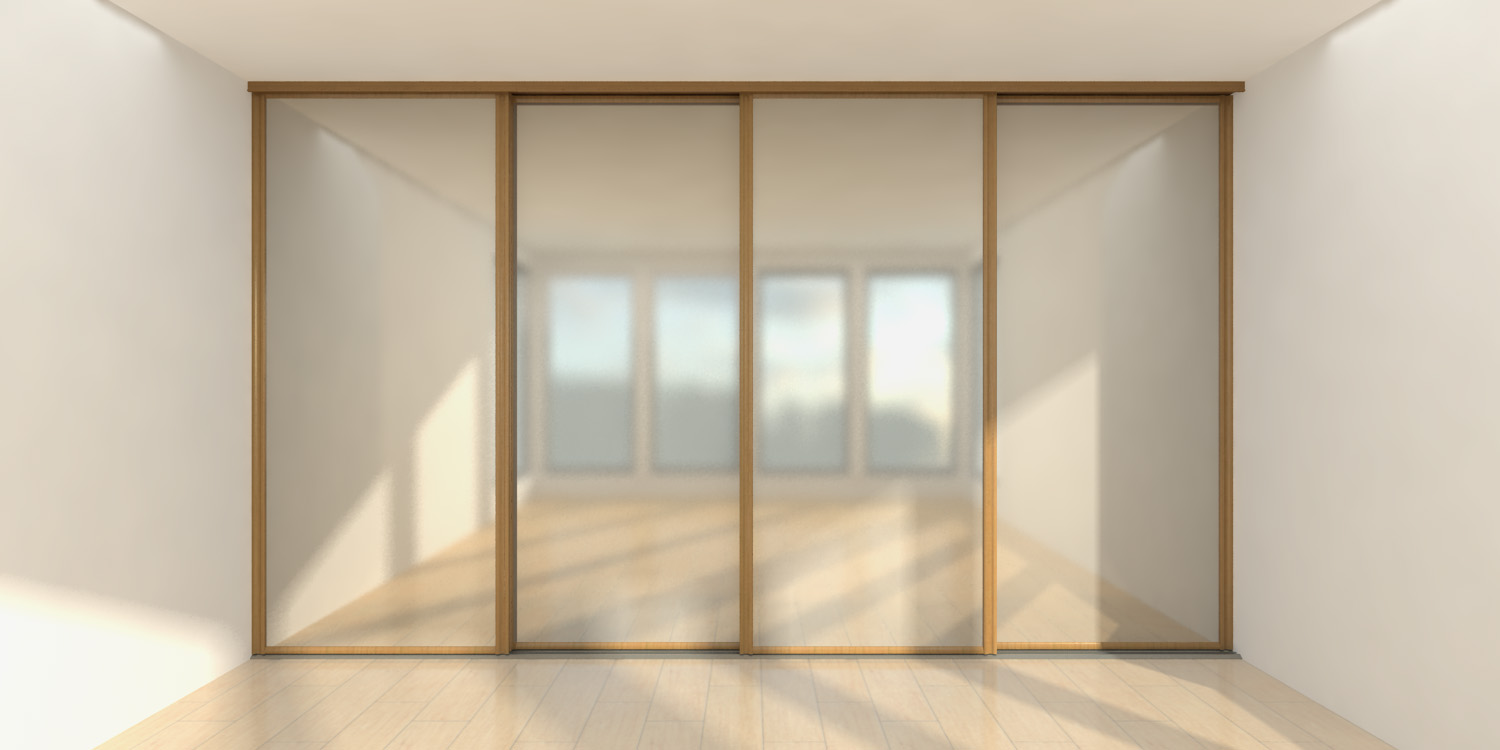
- Between two walls
-
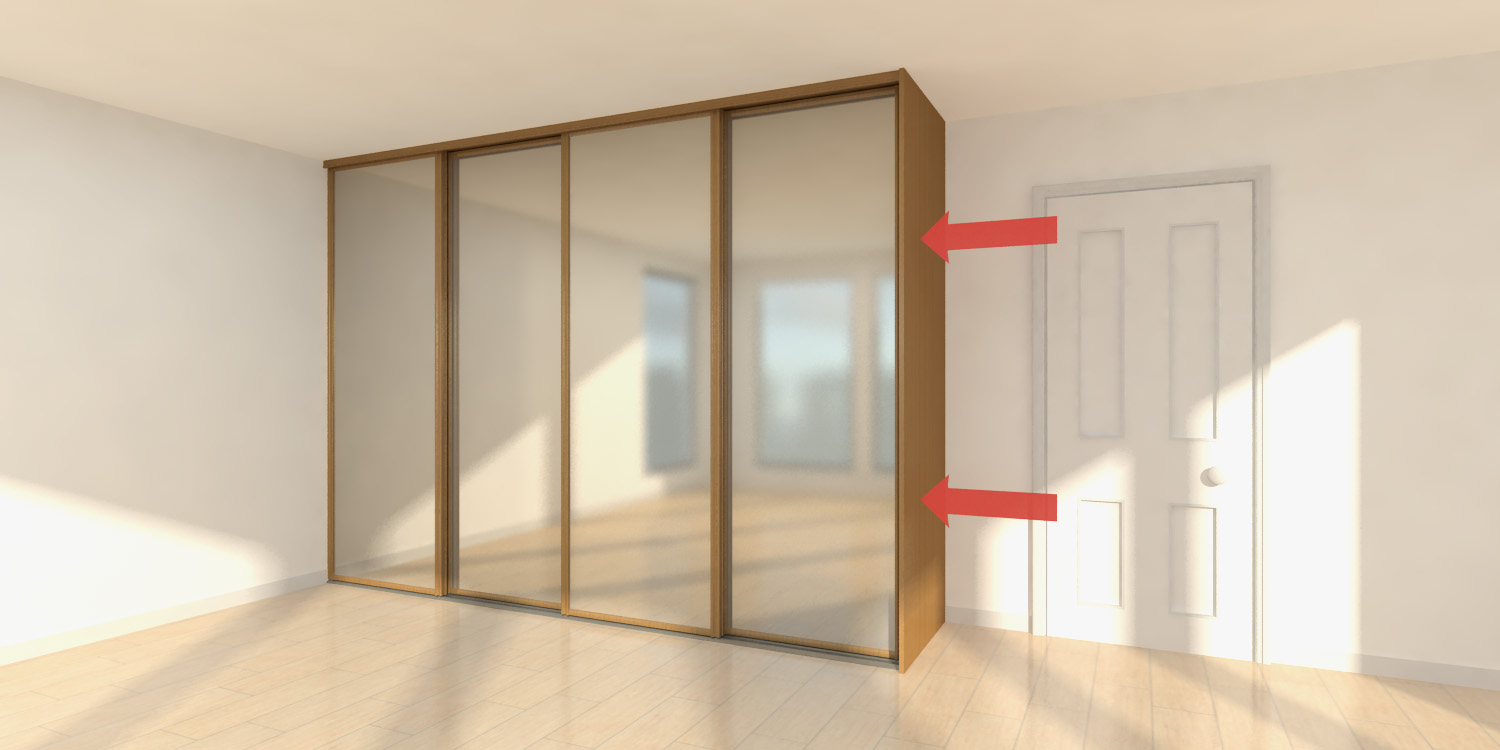
- Against a left wall
-
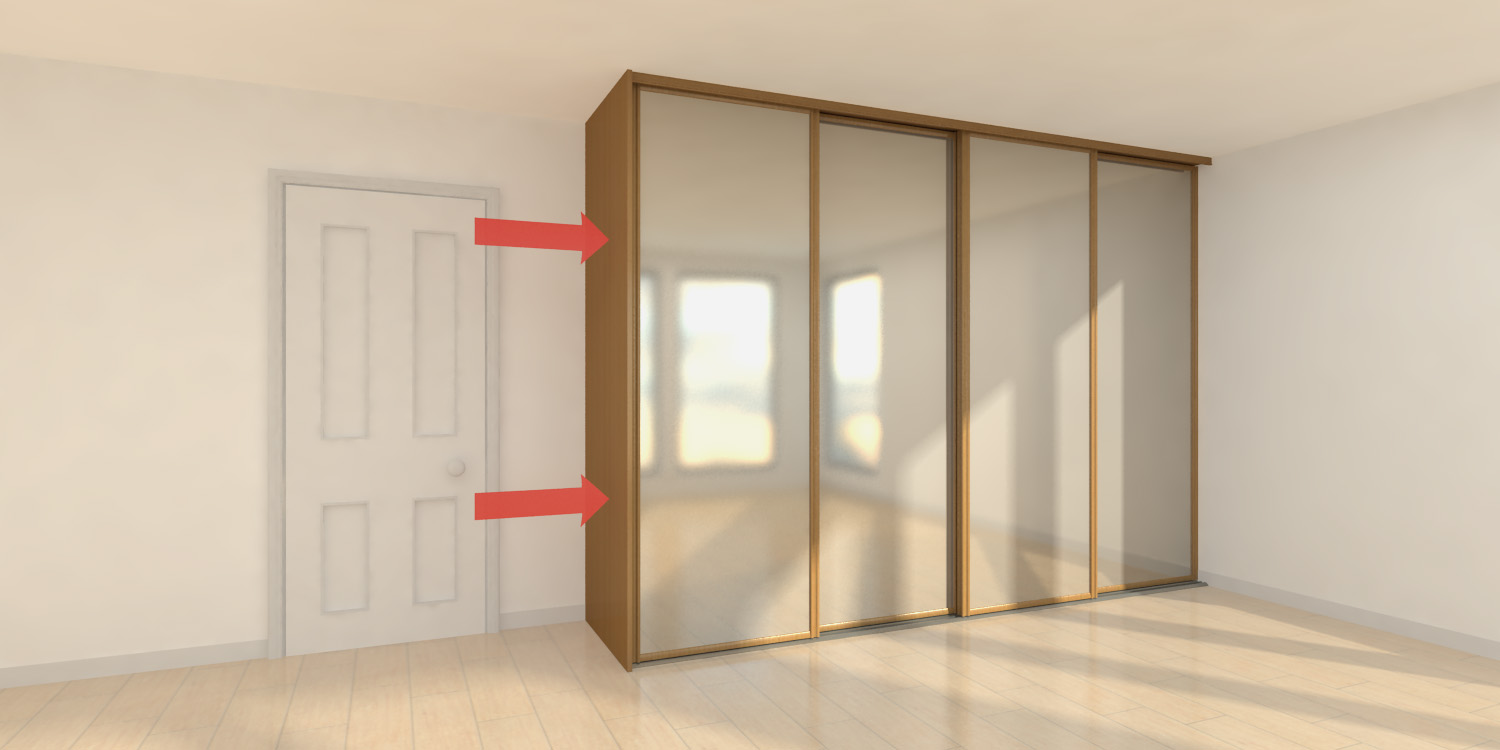
- Against a right wall
-
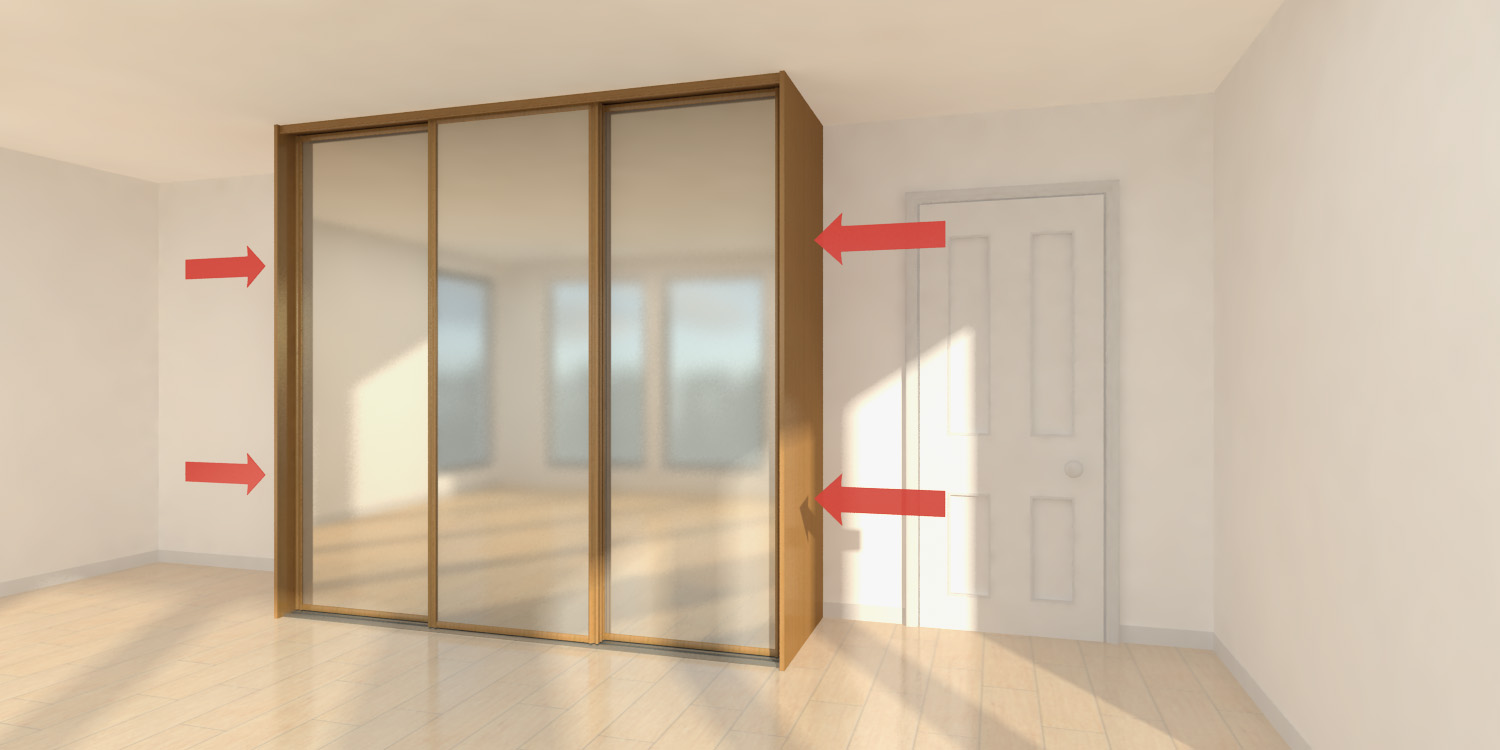
- In free space
If you do not select wall to wall for the order, on any side where there is no wall, we will supply you with a casing end panel as part of your order. End panels come at 64cm deep, however this can be increased to 90cm when you select the casing colour. The depth of the end panel can be reduced during installation as required.
2
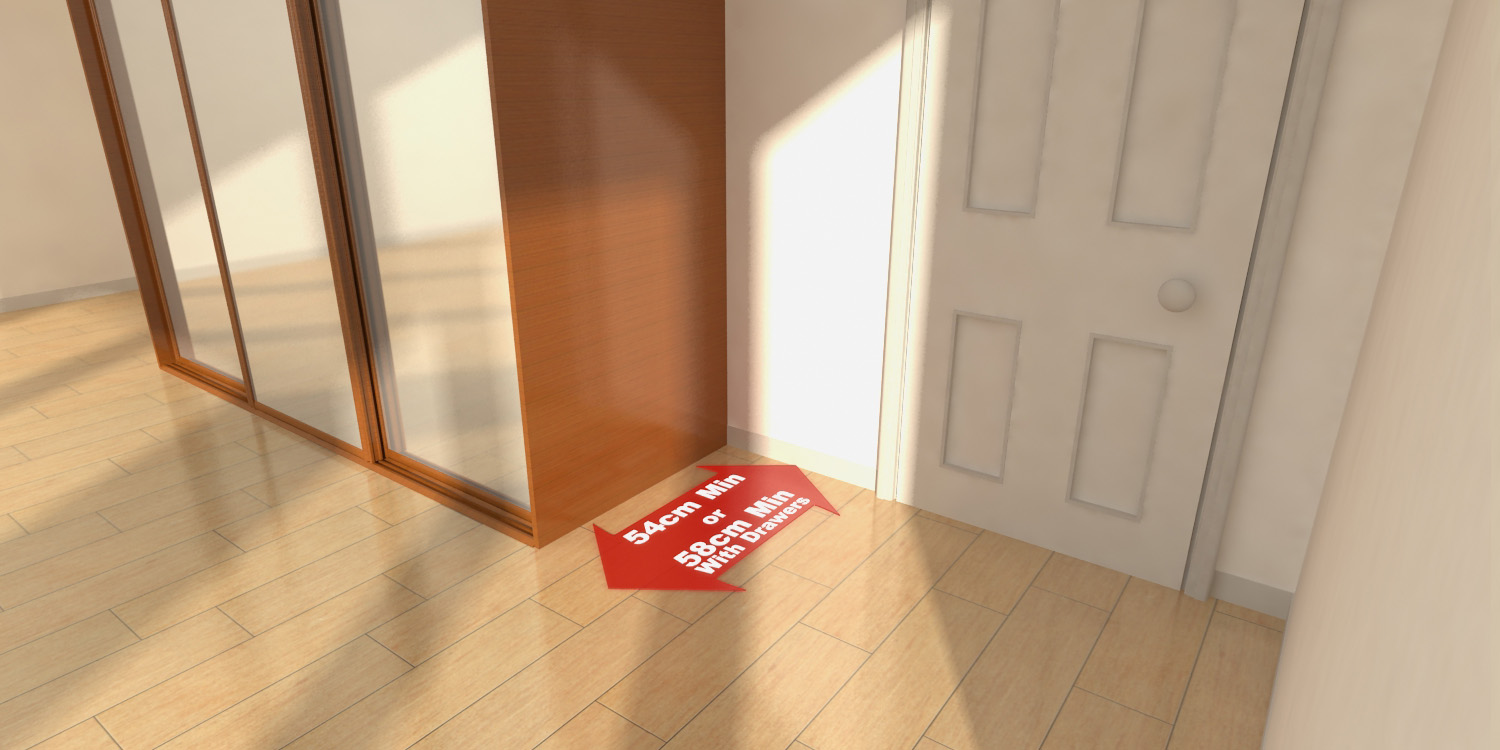
Now you should check that you have a minimum clear depth of 8.7cm for the track and doors and if ordering with our interiors, at least 54cm (58cm if you plan to include drawers) of clear depth from the back wall to the front of where the wardrobe will be positioned, making sure there are no radiators, windows, fireplaces or doors that will interfere with the Wardrobe Depth.
3
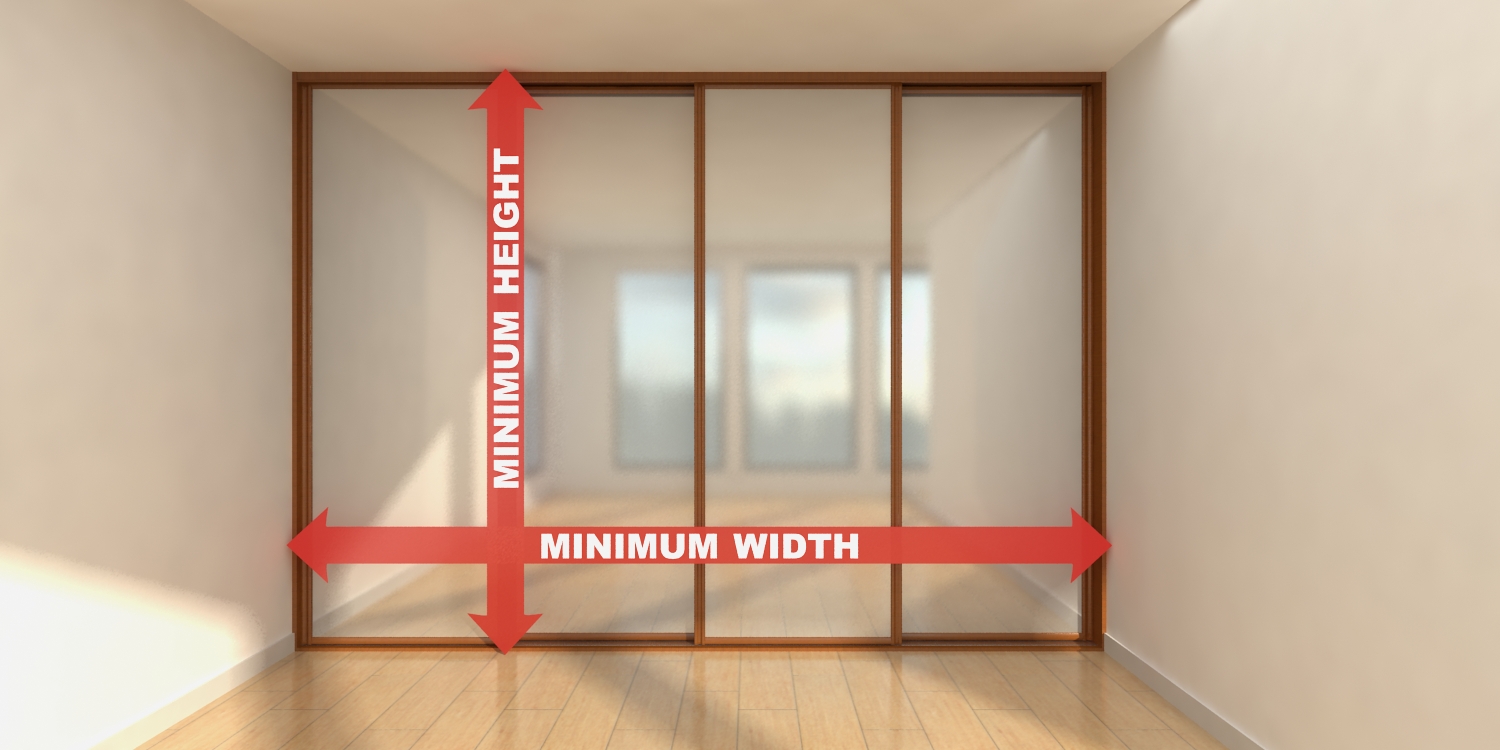
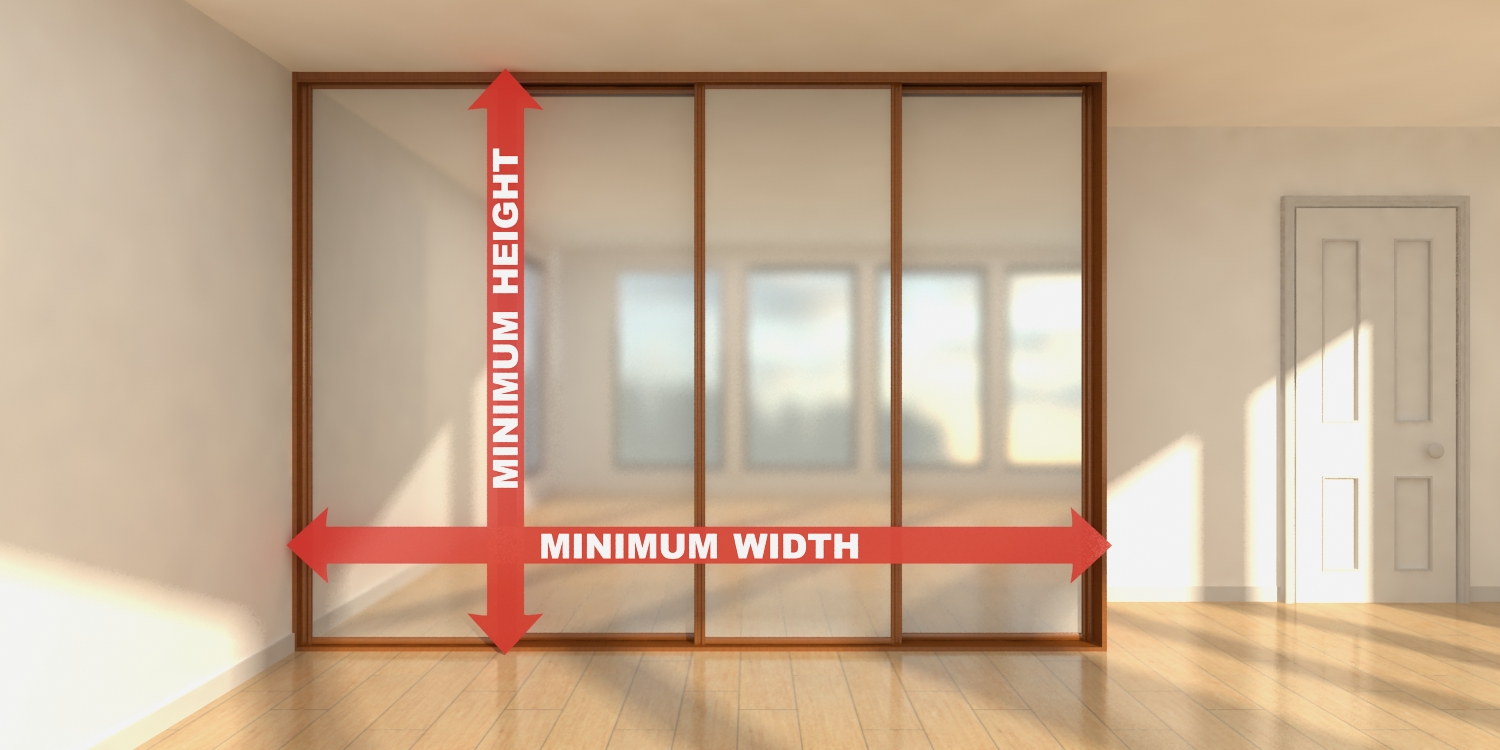
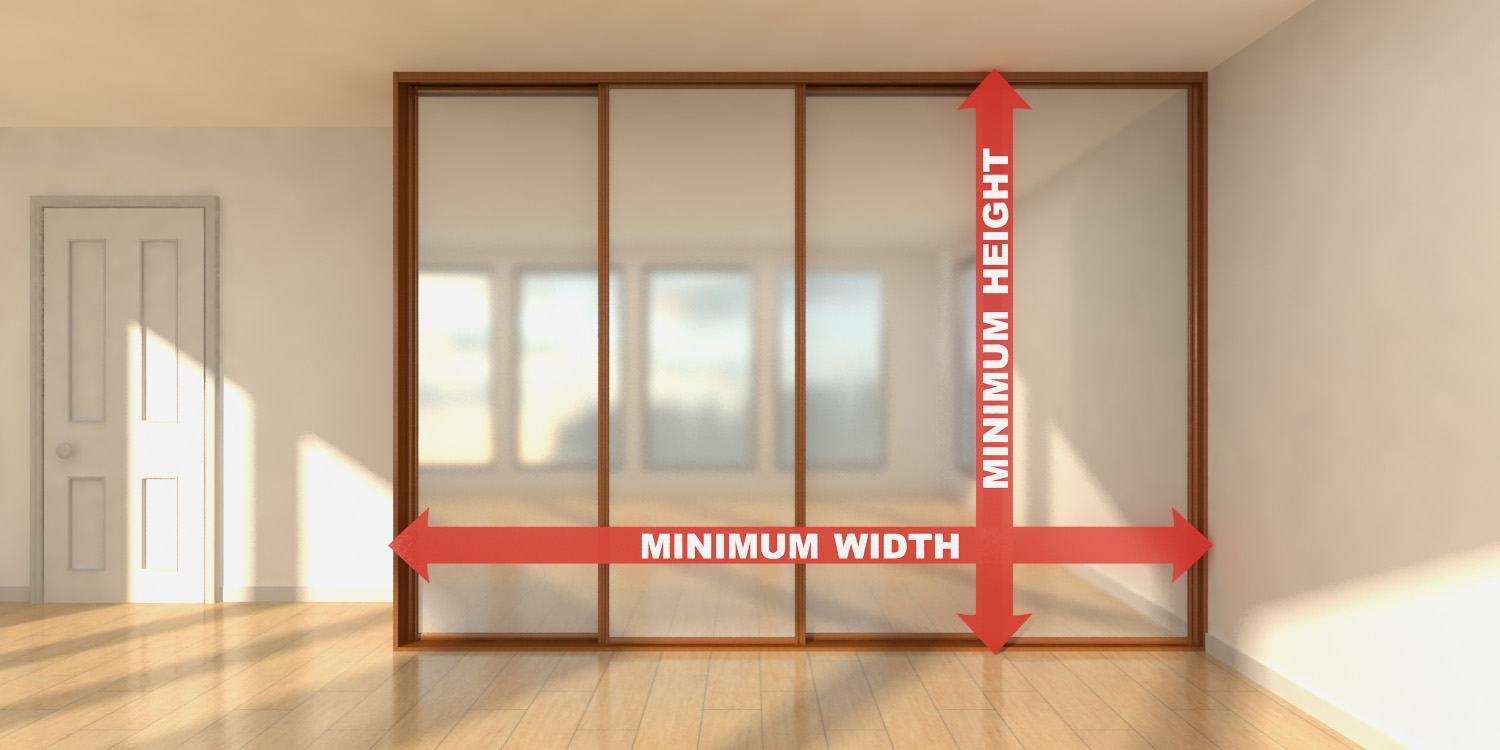
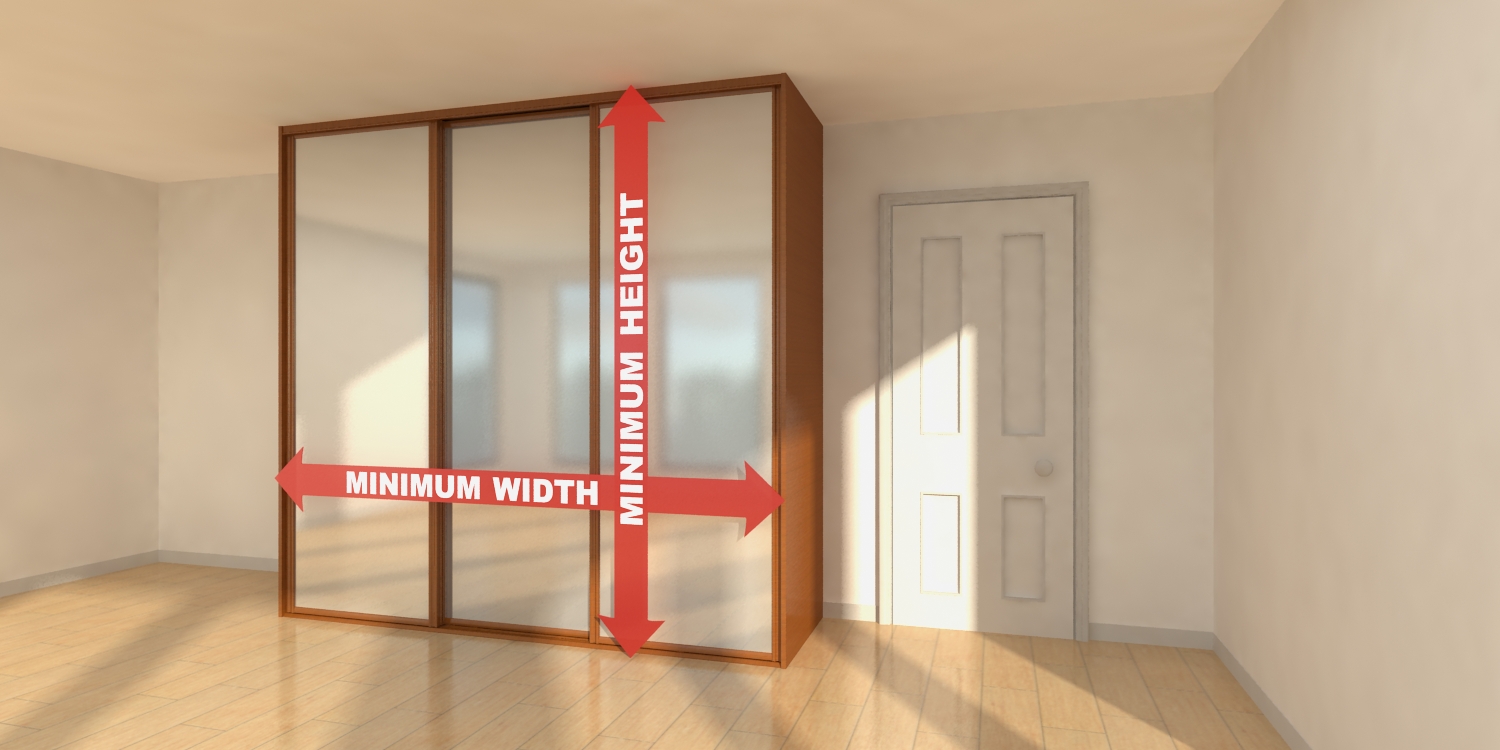
When measuring the wardrobe opening, please ignore any skirting boards, dado rails, picture rails or cornices and simply measure from top to bottom (usually ceiling to floor) and from the outer left hand edge of the opening to the outer right hand edge of the opening whether that be wall to wall, wall to outside of end panel or outside of end panel to outside of end panel. If there are any cables or pipes in the space you are measuring, please Contact Us any time, 7 days a week, 365 days per year and we will assist you.
4
You should now check what floor finish you have (such as carpet or laminate flooring) and consider whether the sliding door system will be fixed directly to the floor finish or whether the floor finish will be removed first. If you plan to remove the floor finish prior to fitting the sliding doors, please allow for this when you take your opening height measurements. Don’t forget that bottom track should NEVER be fitted directly to carpet or directly to the floor below a carpet. Casing MUST be used if you have carpet and this can be fitted on top of the carpet or to the floor and you can have the carpet fitted up to it.

5
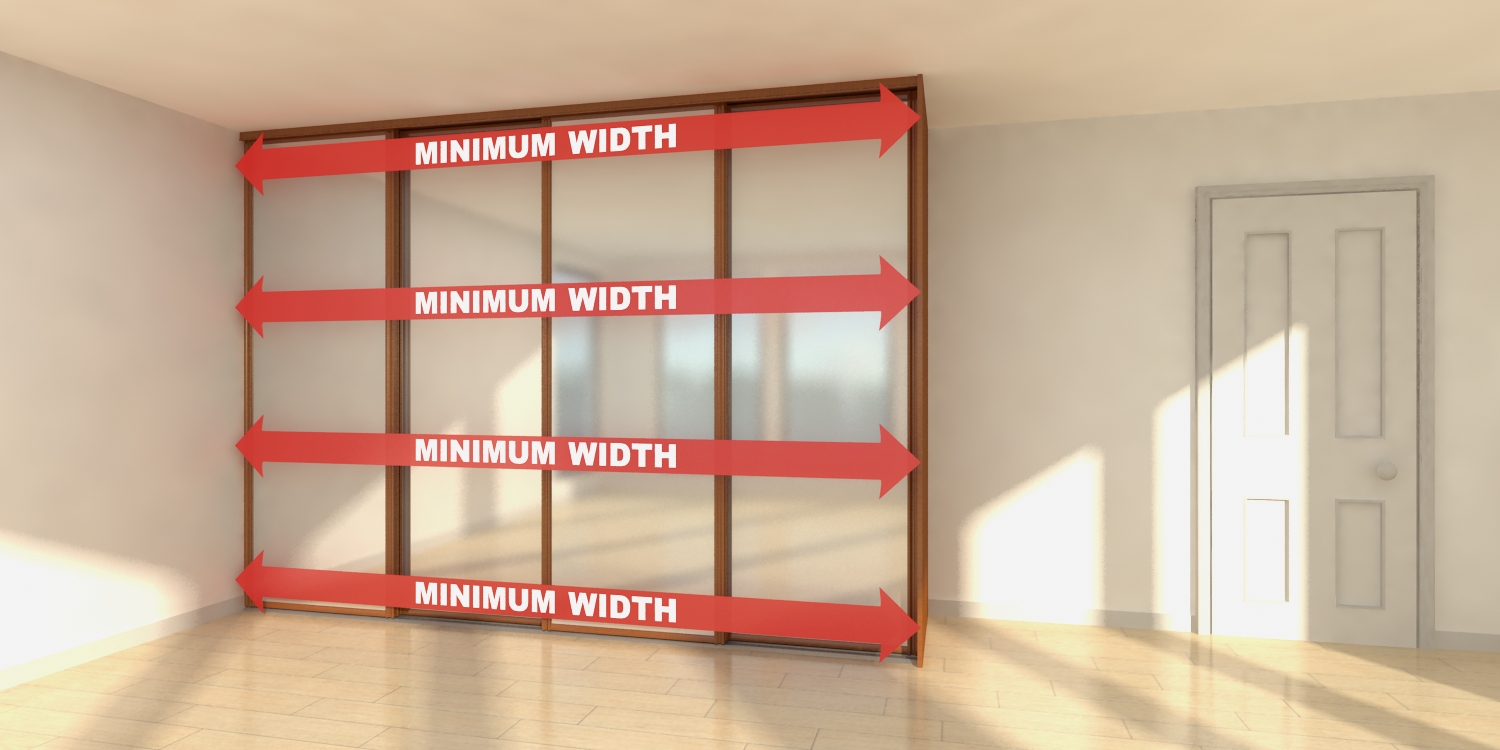
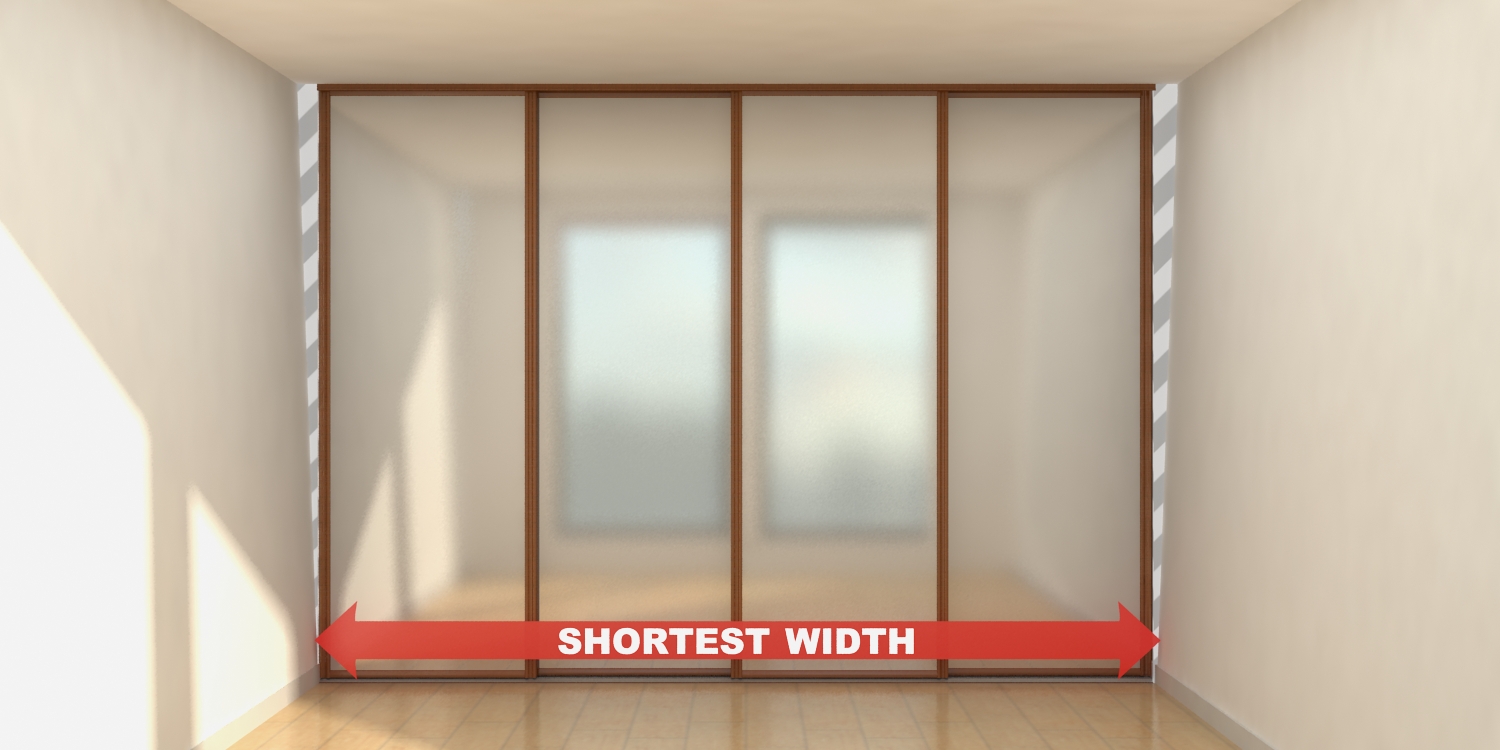
Now you can measure the width of the opening where the doors will slide in mm in a minimum of 4 places. You should measure the top, the bottom and as many places as you can between and make a note of the smallest of the measurements taken. Please note that the opening width is essentially the total width of the sliding wardrobe, whether it is wall to wall, wall to end panel or end panel to end panel.
6
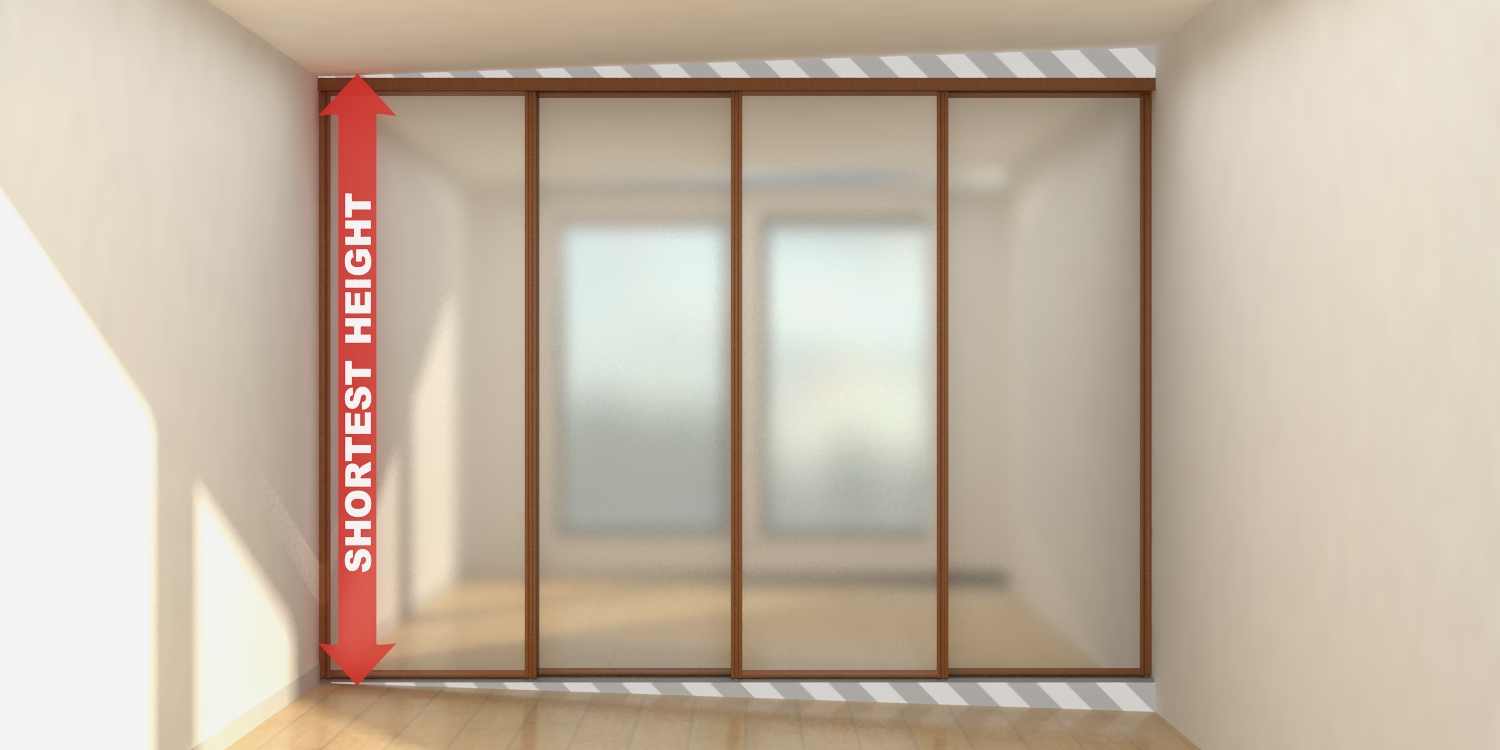
You can now measure the height of the opening where the doors will slide in mm in a minimum of 4 places from the top surface (usually ceiling) to the bottom surface (usually floor), between which the sliding doors will be fitted. You should measure the left-hand side, the right-hand side and as many places as you can between and make a note of the smallest of the measurements taken. If the difference between the smallest and largest measurement you take is more than 10mm, please make sure you advise the individual(s) installing the sliding wardrobe after you have placed your order.

7
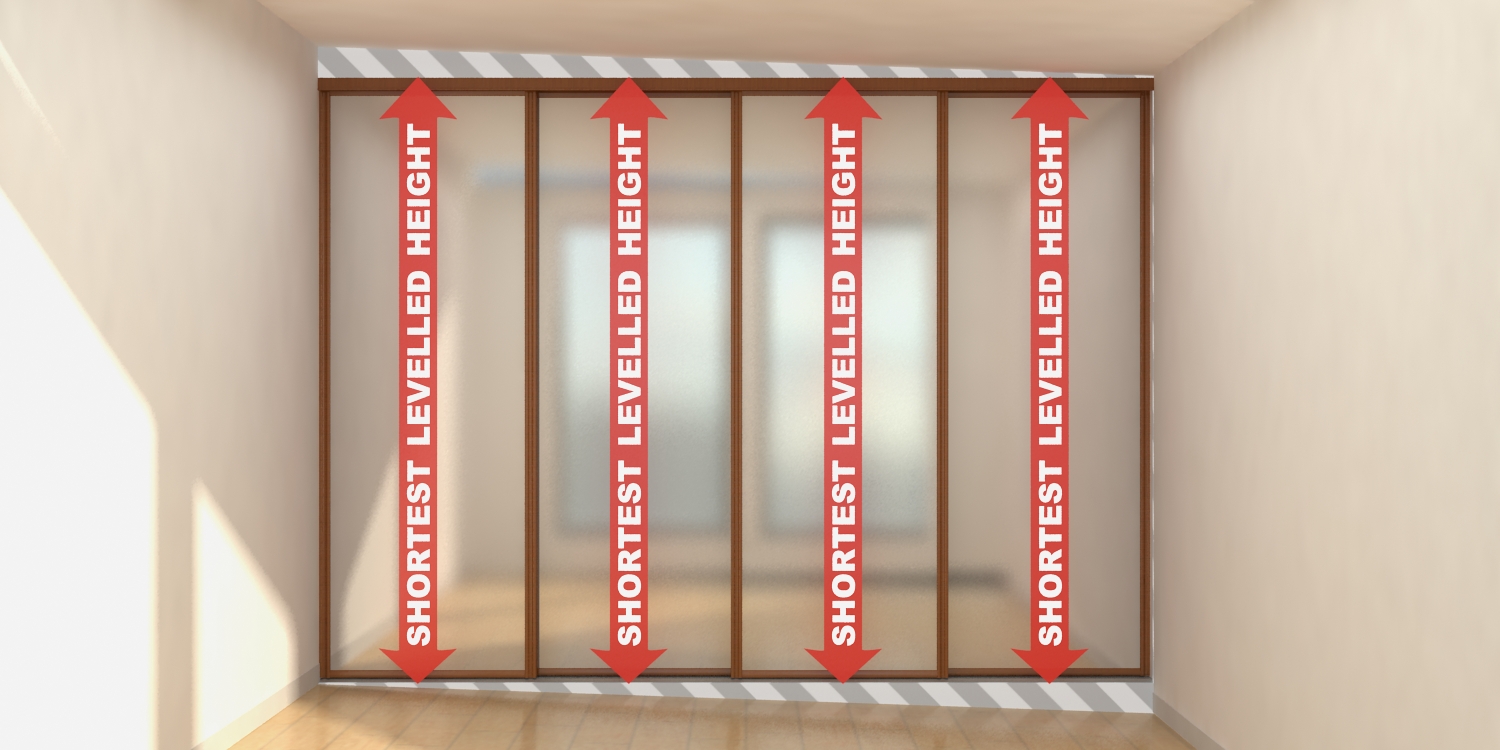
It is not common, but if your top and bottom surfaces (usually floor and ceiling) are both not level and are running out in the same direction, you must calculate the opening height using the shortest levelled height as shown below. If you believe you have this type of space and need additional support, you can Contact Us any time, 7 days a week, 365 days per year and we will assist you.
If you need any support, please Contact Us anytime and if you would like this guide in a PDF form to print please use the download below,